
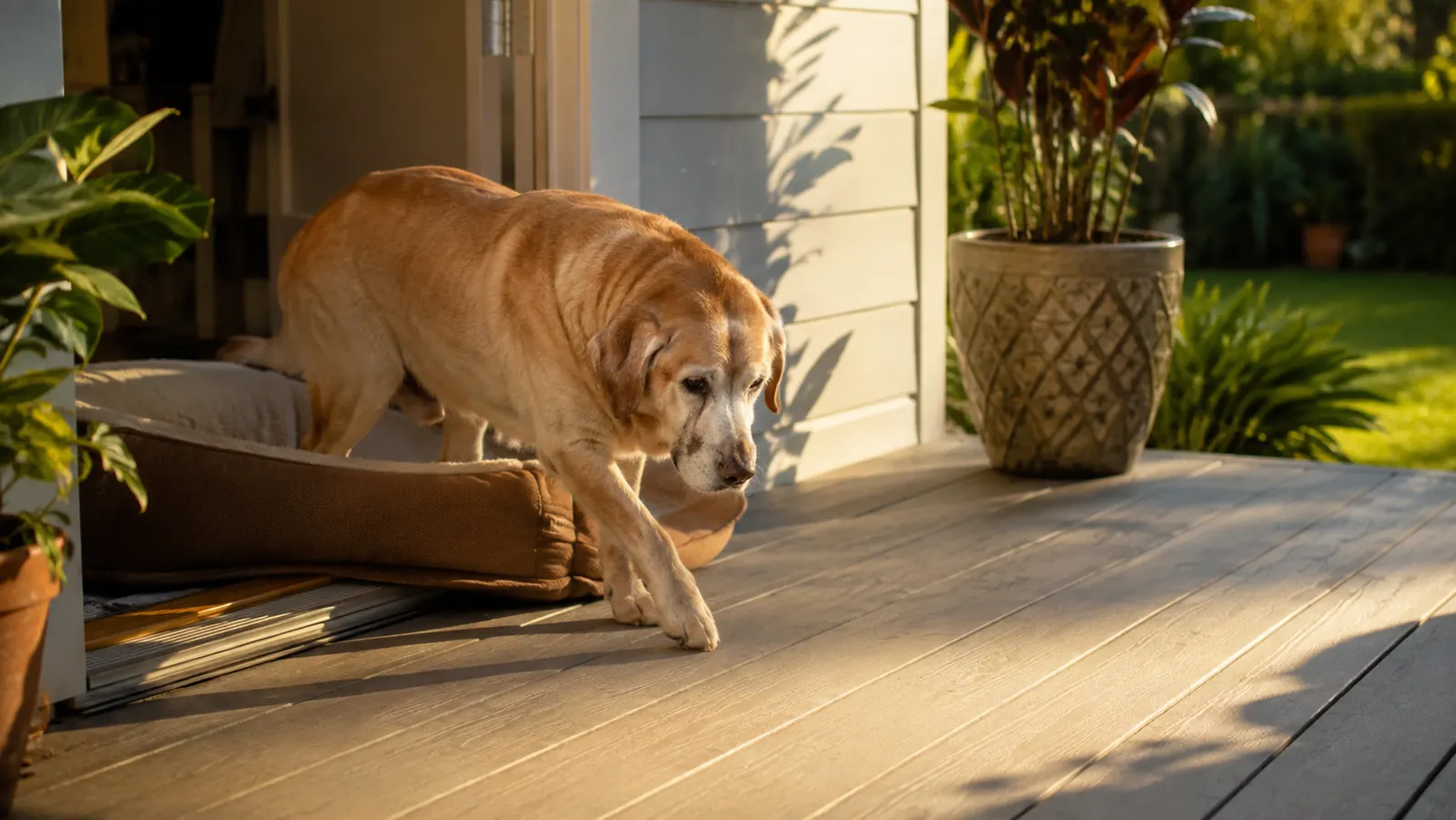
Gus is twelve now. He is a Lab mix I adopted from a shelter here in Ocala, and for the first ten years of his life he hit the stairs like they owed him money. Then one morning last winter I watched him stand at the bottom step, shift his weight twice, and think about it before he committed. That pause is the whole story. It is not a limp, it is not a yelp, it is just a dog doing the math on whether the next move is going to hurt. Some mornings it was a small thing, like him choosing to lie by the couch instead of following me into the kitchen. Other mornings it was more obvious, a slow, deliberate walk instead of the trot he'd had his whole life. Either way, I'd started narrating it to myself before I ever said the word stiffness out loud.
I tried the things you try first, months before I'd ever heard of Pet Honesty. A thicker bed. A ramp we never used because he ignored it completely and walked around it every single time. Watching and waiting, which is really just watching him get a little stiffer every few weeks while I told myself it was probably fine, probably just an off day, probably the cold snap we'd had that week. His vet had already looked him over and called it mild age related hip stiffness, nothing urgent, nothing that needed medication yet, just something to manage day to day. What actually moved the needle was adding a daily hip and joint chew and sticking with it long enough to actually know whether it was working, instead of quitting after two weeks the way I had with the last thing I tried. Here is the routine I used, step by step, from the day I opened the bag to the six week mark when I noticed he was taking the porch steps without stopping to think about them.
Start where Gus started: one chew, once a day
Pet Honesty's Hip and Joint chews are the ones I've been giving Gus since that first stiff morning. Same routine, same bowl, same time of day.
Amazon Check Today's Price on Amazon →Step 1: Rule out anything that isn't just stiffness
Before I changed anything in Gus's routine, I took him in. His vet ruled out anything acute, confirmed it was consistent with ordinary age related hip stiffness, and gave me the go ahead to try a joint supplement alongside his normal food. I'm not a vet and neither is this article. If your dog has a sudden limp, won't bear weight, cries out when touched, or the stiffness shows up overnight instead of over months, that is a vet visit first, not a supplement aisle question. A daily chew is for ongoing, already diagnosed stiffness like Gus has, not a stand in for an exam. He also checked Gus's weight against his last visit, since extra weight on a hip already working harder than it should makes everything worse, and confirmed there was nothing in his bloodwork that changed the plan. That fifteen minute visit was the difference between guessing and actually knowing what I was treating.
This step matters more than it sounds like it should. I've talked to other owners at the dog park who started supplements on a hunch and never mentioned it to their vet, and a few of them were masking something that needed actual treatment underneath a chew that just wasn't going to touch it. Gus's stiffness got the green light first. Everything after this step assumes yours has too, and if you're not sure which category your dog is in, that uncertainty is itself the reason to call the vet before you call it a supplement problem.
Step 2: Pick a chew with real glucosamine and chondroitin dosing, not just the words on the label
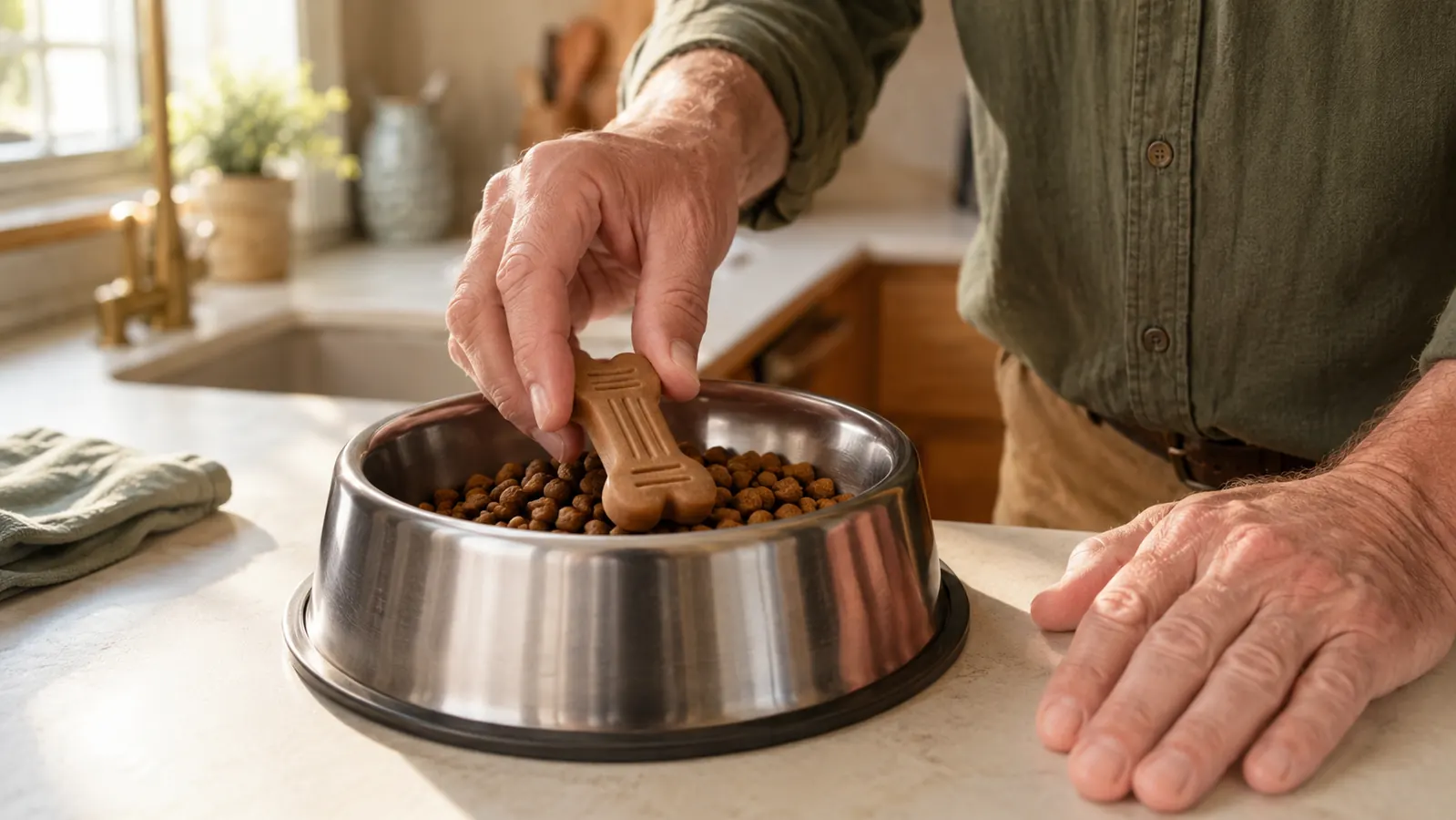
Once I knew what I was dealing with, I looked at what was actually in the chew, not just the front of the bag. Pet Honesty's Hip and Joint formula lists glucosamine, chondroitin, MSM and green lipped mussel on the label, which is the combination Gus's vet mentioned as reasonable to try. Ninety chews come in the bag, which at one chew a day for a 74 pound dog like Gus works out to roughly three months before I need to reorder, so it isn't something I'm restocking every few weeks or forgetting to buy in time. I also checked how the ingredients were sourced, since green lipped mussel in particular varies a lot in quality between brands, and I wanted something that named its sourcing rather than burying it. It's a small detail, but it's the kind of thing that tells you whether a company is trying to make a real product or just trying to make a bag that sells.
I'd wasted money before on a joint powder that listed glucosamine so far down the ingredient list it may as well not have been there. It had the right words on the front and nothing to back them up on the back. Read the actual amounts per chew if the bag lists them, not just the ingredient names, because a supplement that names the right things but doses them thin is money spent for nothing, and I've made that exact mistake once already so I'd rather you skip it.
Step 3: Start the dose your vet or the label recommends, and weigh your dog first
Dosing on these chews is weight based. Gus is 74 pounds, which put him at one full Pet Honesty chew a day according to the label, and his vet agreed that was reasonable to start with. If you haven't weighed your dog recently, do it before you open the bag. A dog under the weight bracket on the label needs less, not the same amount just because it's easier to hand over a whole chew and call it done. I also wrote the start date on the calendar taped inside our pantry door, because six to eight weeks feels a lot longer when you're not tracking it and a lot shorter when you can see the date getting closer.
For anything outside the label's stated range, or if your dog is pregnant, nursing, very young, or already on a prescription medication, ask your vet about the right dose before you start rather than guessing your way there. This is one of the few places where getting it wrong costs you nothing dramatic, but getting it right from day one means you're not restarting the clock three weeks in because you under dosed and never gave the ingredients a real chance to build up.
Step 4: Build it into a routine that survives a bad morning
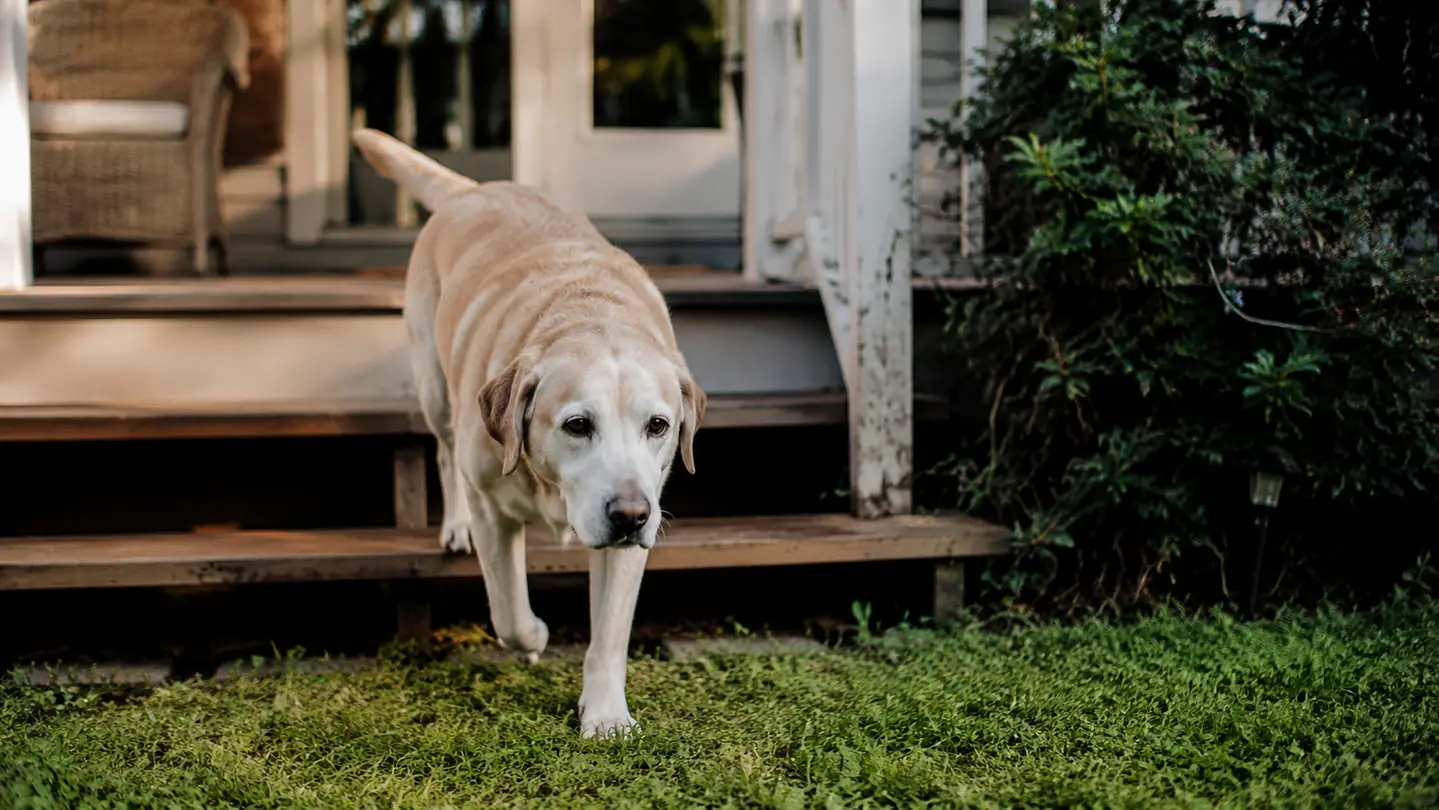
I give Gus his Pet Honesty chew with breakfast, dropped right on top of his kibble in his regular stainless bowl. Same bowl, same spot on the kitchen floor, same few minutes after I let him out. He eats it without noticing it's any different from a treat, which matters because he's not a dog who tolerates being pilled, and I've stopped fighting him over medication where I don't have to. If your dog is fussier, some owners break the chew into the wet food or hide it inside a plain treat, but I never had to with Gus. Millie, my nine year old terrier mix, tries to steal his every single morning, so I've had to start feeding them a few feet apart. On the two mornings a month we're out of town visiting my sister, I pack the chews in a labeled snack bag right next to his food so whoever's watching the house doesn't have to guess. It sounds like overkill until you realize a missed week is basically a reset.
The routine part is the part people skip. A joint chew given four days a week isn't the same thing that was tested and isn't the same thing that showed results for Gus. I put the bag next to his food container so I physically can't feed him breakfast without seeing it and remembering. That's the whole system. It doesn't need to be more complicated than that, and on the mornings when I'm rushing out the door, that visual cue is the only reason it still happens.
Step 5: Give it real time and watch for the right signs, not a miracle
Nothing changed the first week. Nothing changed the second week either, and I remember being annoyed about that, half convinced I'd wasted money again the way I had before. By week four I noticed Gus was getting up off his bed in one motion instead of two, less of that visible pause before he committed to standing. By week six he was taking the porch steps at a normal pace instead of stopping at the bottom to think about it. That six to eight week window is what his vet told me to expect going in, and it lined up almost exactly.
I use Millie as my baseline for what normal movement looks like in this house. She's never had joint trouble a day in her life, so watching Gus's morning stretch and stair pace start to look more like hers, rather than tracking some abstract mobility score I made up, was the clearest signal I had that something real was changing. If you're six to eight weeks in and you're seeing nothing at all, no change in the morning stretch, no change on stairs, that's worth a call back to your vet rather than doubling the dose on your own or assuming it just needs more time indefinitely.
What Else Helps
The chew was not the only thing I changed, and honestly I don't think it would have worked as well alone. I swapped Gus's old flat bed for an orthopedic one with real support, which made the getting-up part easier on its own regardless of what was going on with the supplement. I kept his walks shorter but more frequent instead of one long walk that left him stiff and slow the next morning, which is a trade my own hips would probably thank me for too. And I've watched his weight more closely, because a few extra pounds on a dog with hip stiffness is extra weight on the joint doing the least well, and that adds up faster than people expect on a Lab mix his size.
None of that is a substitute for the supplement, and none of it is medical advice, just what fit alongside it for us in this house. Pearl, our ten year old cat, has no interest in any of this and gets to sleep through the whole routine, which honestly feels a little unfair. Any sudden change in how your dog moves, eats, or behaves is still a vet call, not a wait and see, no matter how well the chew has been working up to that point.
By week six, Gus was taking the porch steps at a normal pace instead of stopping at the bottom to think about it first.
Same chew, same bowl, same routine that got Gus back on the porch steps
If your senior dog is doing the same hesitation Gus used to do at the bottom of the stairs, this is the one I'd start with, alongside your vet's go ahead.
Amazon Check Today's Price on Amazon →