
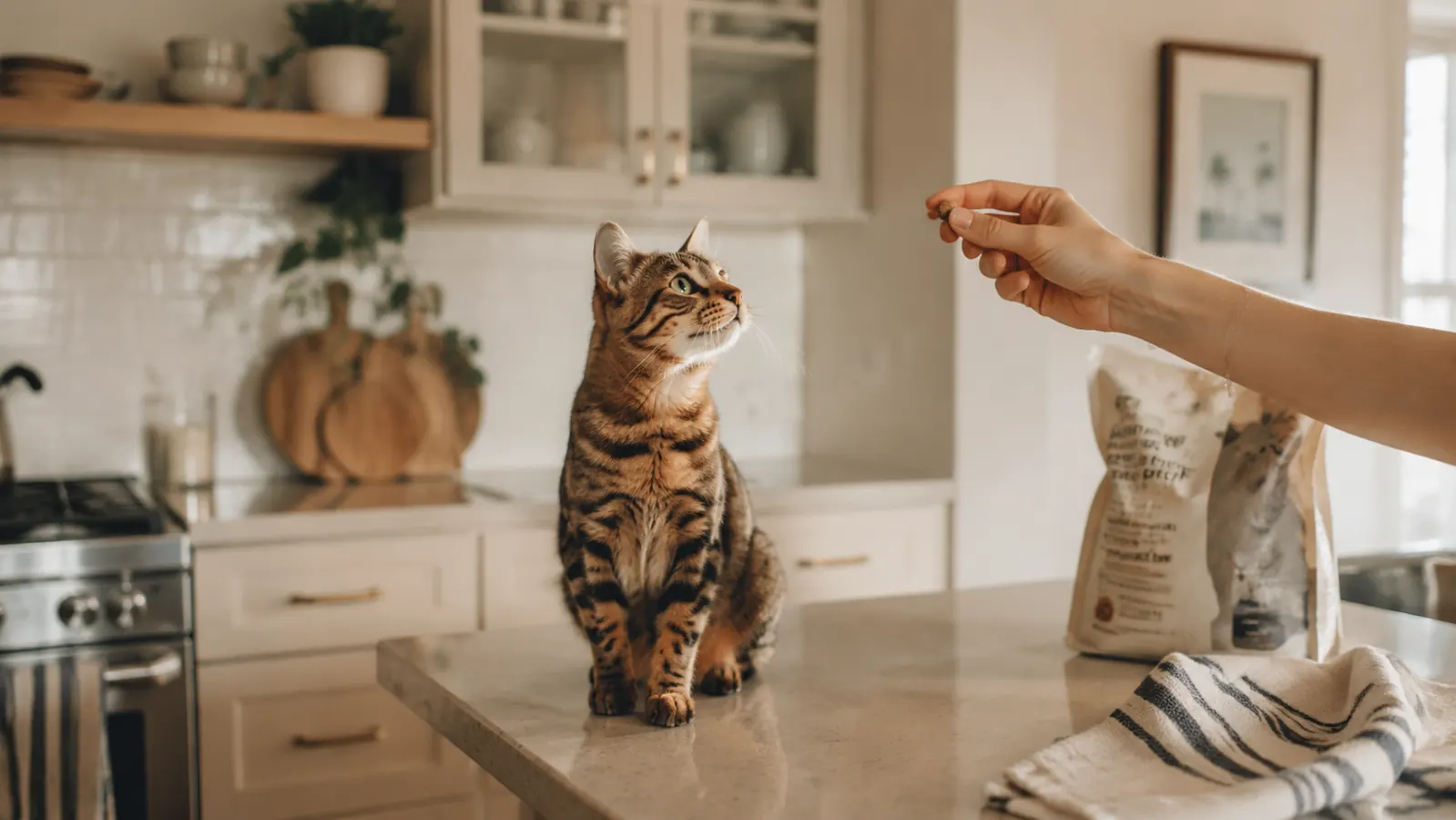
Pearl is my ten-year-old indoor cat, and for about a year I could not get near her face without turning my head. I tried brushing her teeth with a finger brush twice, and both times ended with me bleeding and Pearl hiding under the bed for an hour. I tried a water additive that promised fresher breath in the bottle's own words. Three weeks in, nothing had changed except the color of her water bowl. I was starting to think bad breath was just something you lived with once a cat hit double digits.
What actually worked was simpler than any of that, and it came from a bag of Greenies Feline Dental Treats a friend left at my house after cat-sitting. I did not expect much. Pearl is picky about texture and has walked away from treats that cost twice as much. But she ate them, kept eating them, and by the end of the second week my husband said something out loud that I had been noticing quietly myself: her breath did not stop him mid-sentence anymore.
This is the exact routine I built around that bag of Greenies, the roasted chicken flavor specifically, five steps, nothing complicated, and the honest timeline for when you should expect to notice a difference. I am not a vet and this is not veterinary advice. If anything below sounds like it might apply to a health issue rather than ordinary tartar breath, that call belongs to your vet, not a blog post.
I also want to be upfront that a decade of ordinary cat ownership had taught me nothing useful about dental care. Nobody warns you at adoption that a cat's mouth needs maintenance the same way a dog's joints or a person's own teeth do. I treated Pearl's breath as background noise for years before it got bad enough that I actually did something about it, and I wish I'd started this routine long before it got to that point.
See Today's Price on the Treats That Fixed Pearl's Breath
Greenies Feline Dental Treats are the crunchy dental chew I now keep in the same cabinet as her food, and the routine below is built entirely around them.
Amazon Check Today's Price on Amazon →Step 1: Get an Honest Baseline Before You Start
Before you introduce anything new, actually smell your cat's breath up close and look at their gums and teeth in decent light. This sounds obvious, but most of us avoid doing it precisely because the breath is the problem. I held Pearl on my lap, lifted her lip gently with one finger, and looked at the line where her teeth meet her gums. Hers had a thin brownish film along the back molars and her gums were slightly pink-red rather than the pale pink they'd been at her last checkup.
Write down what you see, even just a note on your phone. Is the breath sour, or does it smell distinctly rotten? Sour and slightly stale is usually just tartar buildup and the normal aging of an indoor cat's mouth. A smell that's genuinely foul, along with drooling, pawing at the mouth, or not eating normally, is a different situation and not one a dental treat is going to solve on its own.
If you see loose teeth, bleeding gums, or your cat flinches when you touch their face, skip the rest of this guide for now and call your vet first. Dental disease in cats can move past what a daily treat can manage, and only your vet can tell you whether you're dealing with ordinary tartar or something that needs a cleaning under anesthesia. I made this call myself the year before with Pearl's littermate-type buildup, and the vet visit is what told me a daily treat was a reasonable next step rather than a wasted one.
Age matters here too. Pearl is ten, and our vet was clear that a ten-year-old cat's mouth simply has more history in it than a two-year-old's, more years of tartar layering on tartar. If your cat is a senior like Pearl, don't expect the same speed of results you'd see in a younger cat with lighter buildup, and don't take a slower timeline as proof the treats aren't working. It just means you're starting further back.
Step 2: Introduce the Treats Slowly, Not All at Once
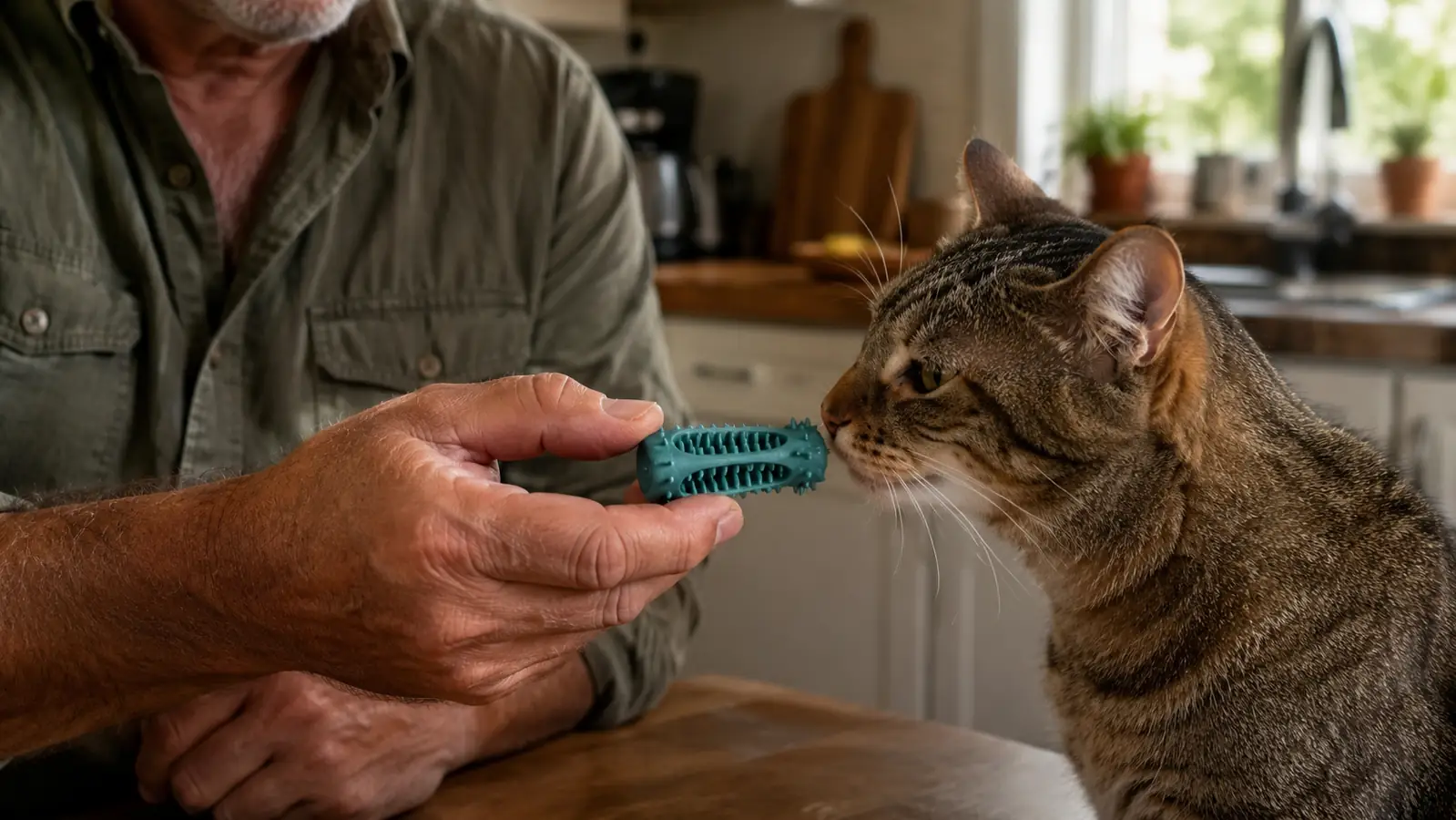
The bag suggests a daily amount based on your cat's weight, and I'd stick close to it rather than winging it. Pearl is a little over nine pounds, so I started her on two treats a day, split into a morning and evening piece rather than both at once. Cats can be strange about new textures, and a hard crunchy treat is a different mouthfeel than the soft chews or pouches most cats grow up eating.
The first day, I put one Greenies treat down next to her regular bowl at breakfast and walked away. She sniffed it, ignored it for an hour, then ate it later when I wasn't watching, which is very on-brand for Pearl. By day three she was waiting by the treat cabinet at the usual time. If your cat turns their nose up completely for the first two or three days, try breaking a treat in half so the smell is stronger and the size is less intimidating, and try offering it right after a meal rather than between meals.
Because these are calorie-dense, count them as part of your cat's daily food, not extra on top. I trimmed a small amount off Pearl's regular kibble portion once she was reliably eating two treats a day, mostly because she's an indoor cat who doesn't burn much energy chasing anything more athletic than a laser pointer. A 4.6 ounce bag lasts a single cat a while at two treats a day, so budget for restocking rather than treating it as a one-time purchase.
If your cat has dental sensitivity or missing teeth already, watch how they actually chew the first few times rather than assuming the crunch is fine for every mouth. Pearl chews on her right side more than her left, which I only noticed because I was watching closely during this introduction period. A cat avoiding one side entirely while eating a hard treat is worth mentioning at the next vet visit.
Step 3: Make the Timing Boringly Consistent
This is the step people skip, and it's the one that actually made the difference for Pearl. A dental treat works mechanically, by scraping plaque off the tooth surface as your cat chews, so it only helps the teeth it actually touches on the day it's eaten. Giving one on Monday and forgetting until Thursday means three days of plaque building back up before the next scrape.
I set two reminders on my phone, one at 7am and one at 6pm, tied to the same times Pearl already expects food. Same bowl, same spot on the counter, same voice cue I use for her regular meals. Within a week it wasn't a task I had to remember, it was just part of feeding her, the same way I don't have to remind myself to fill her water dish.
If you have a multi-cat household and worry about the wrong cat eating the treats, feed them separately in different rooms or crates for a few minutes, the way you might already do at mealtime. Millie, my terrier mix, has no interest in cat treats and Gus, my old Lab mix, has never once managed to get near Pearl's food bowl before she's finished, but I know that's not a guarantee in every house, especially with a dog food-motivated enough to try.
Travel and weekends are where this routine falls apart for most people, myself included at first. I now keep a small travel container of treats in my overnight bag so a trip to visit family doesn't turn into a five-day gap. If a full miss happens anyway, just pick the routine back up the next day rather than trying to double up and catch up, which isn't how the mechanical scraping works.
Step 4: Know the Real Timeline, Not the Marketing Timeline
Here's what nobody tells you on the bag: breath improvement and tartar improvement happen on two different clocks. Breath got noticeably better for Pearl by day ten to fourteen, which lines up with what I'd expect from removing surface bacteria and food particles that cause a lot of the odor in the first place. That part is fast.
The tartar itself is slower. The existing brownish buildup on Pearl's back molars didn't visibly soften until closer to week five or six of daily treats, and it never fully disappeared the way a professional cleaning would clear it. What I got was less new buildup forming and a noticeably lighter existing layer, not a mouth that looked like it had just come from the vet's office.
If you're at week three and seeing zero change in breath at all, that's worth a note rather than a reason to quit outright. Some cats need the dose adjusted, some have buildup heavy enough that surface treats alone won't cut through it, and in a few cases what looks like ordinary tartar breath is actually a tooth resorption or infection that needs a vet's eyes, not a longer trial period. Don't wait months on a treat that clearly isn't moving the needle at all; that's a conversation for your vet, not more patience.
Every cat's mouth is different, so treat my timeline as a rough guide rather than a promise. A friend of mine with a younger, lighter-buildup cat saw breath improvement inside a week. Another friend with a fifteen-year-old cat with heavier tartar needed almost two months before she noticed a real shift. Both were using the same treats. The variable was how much work there was to do at the start, not the product itself.
Step 5: Keep a Simple Log So You're Not Guessing
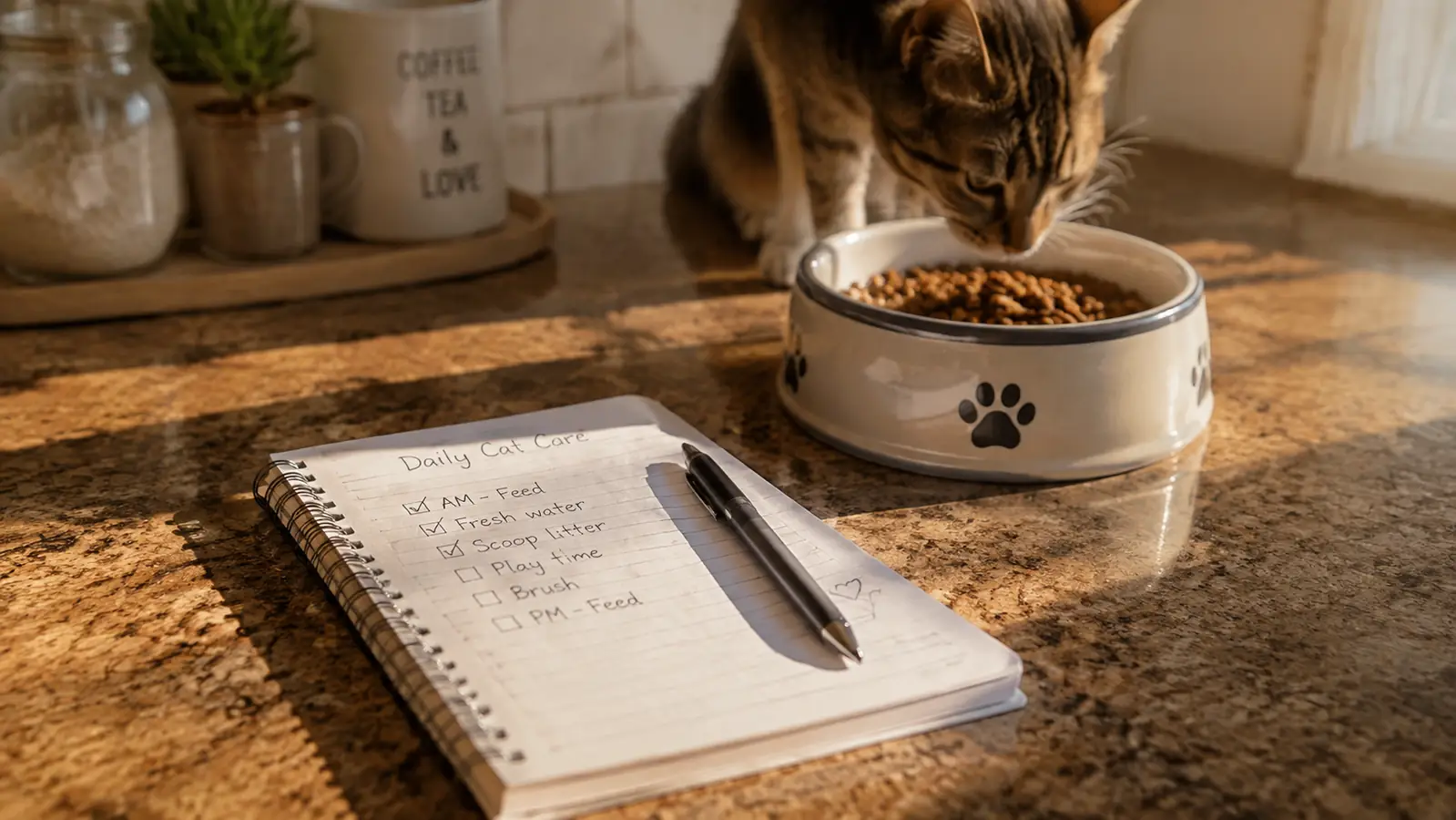
I kept a small notebook on the counter next to Pearl's treats, nothing elaborate. Every Sunday I'd jot two or three words: breath better, breath same, gums look pink, still eating both treats without a fight. It took maybe twenty seconds a week and it's the only reason I can tell you with confidence that day twelve is roughly when I noticed a real change, rather than guessing after the fact.
A log also catches the slow slide backward. Around month four, Pearl started skipping her evening treat two or three times a week because I'd gotten a little lazy about the reminder. My notes showed her breath drifting back toward where it started before I'd even consciously noticed the smell again. Without the log I might have blamed the treats. The real problem was inconsistency on my end, not the product.
It also gives you something concrete to bring to the vet if you do end up needing a professional cleaning down the line. Instead of a vague 'her breath has always been kind of bad,' I could say exactly when it started improving, when it plateaued, and when it needed a real cleaning to finish the job the treats couldn't. That kind of specificity makes for a shorter, more useful appointment.
What Else Helps Alongside the Treats
Dental treats do real work, but they're one piece of a mouth that's otherwise being ignored. If your cat will tolerate it, even a few seconds of finger brushing with a cat-safe enzymatic toothpaste two or three times a week adds mechanical cleaning the treats can't reach, especially along the gumline in front. Pearl still won't allow this for more than about four seconds, so I take what I can get and don't fight her over it.
The other piece is the annual vet visit, and I mean actually asking about her teeth rather than just showing up for vaccines. Our vet does a quick dental check every year as part of the regular exam, and that's the appointment where anything the treats and brushing can't fix gets caught early instead of turning into a problem that needs surgery. A daily treat is maintenance, not a substitute for professional eyes on your cat's mouth once a year.
Fresh water matters more than people think, too. I switched Pearl's bowl to one I clean every single day instead of every few days, since bacteria building up in a dirty water bowl can undo some of what the treats are doing. It's a small habit, it costs nothing, and it stacks on top of the treats instead of competing with them.
Diet plays a role as well, though I'd call it a supporting one, not the main event. Pearl eats mostly dry kibble with a little wet food mixed in, and our vet mentioned that an all-wet diet can sometimes leave more residue on the teeth than a kibble-heavy one, since there's less natural abrasion at each bite. That's not a reason to switch food entirely, just context for why the treats are doing meaningful work that her regular meals aren't.
By day twelve I could hold Pearl's face in my hands without turning my head first, and that's the whole reason I kept going.
Start the Same Routine With Greenies Today
If your cat's breath has you avoiding their face the way mine did, the Greenies Feline Dental Treats routine above is the exact one I've stuck with for over a year now.
Amazon Check Today's Price on Amazon →