

Gus started shedding little dry flakes onto the dark rug every time I brushed him last winter, and his coat had gone from glossy to dull in what felt like a few weeks. My first move was to raid my own medicine cabinet and drop a couple of human fish oil capsules into his dinner, the same ones I take for my joints. It worked a little, for about two weeks, then I gave up because I could never tell if I was actually getting oil into him or just watching him spit a slick, fishy pill across the kitchen floor. That is when I switched him to Zesty Paws Salmon Oil instead, and it turned into an accidental months-long experiment comparing a liquid pump against capsules across three very different pets in this house.
Short answer: if you have a picky dog like Gus or a cat like Pearl who will not sit still for a pill, the pump bottle wins on ease and on actually getting the dose in. If you want a fixed amount with zero guesswork and nothing that needs a fridge, capsules win. I ran both in this house long enough, through a Florida summer and into a cooler stretch this spring, to tell you exactly where each one falls short and not just where it shines.
| Zesty Paws Salmon Oil | Fish Oil Capsules | |
|---|---|---|
| Dosing accuracy | Pump doses roughly by weight, about one pump per twenty five pounds for dogs, so you eyeball a partial pump for a cat Pearl's size. | Each capsule holds a fixed, printed amount, so Gus and Millie just get a different capsule count, no eyeballing a pump stroke. |
| Mess and cleanup | The pump top can drip down the bottle and leaves an oily ring on the counter if you are not careful. | A capsule goes straight into food or gets swallowed whole, no oil residue on the counter or your hands. |
| Picky eaters | The fish smell and pourable texture soaks into kibble, which is why Gus and Millie both clean their bowls the second it hits their food. | A whole capsule often gets picked out and left in the bowl, and piercing one to pour it out is its own sticky chore. |
| Works across species | One bottle covers Gus, Millie, and Pearl at different pump amounts based on their weight, no separate products to buy. | Capsule strength is usually sized for dogs, so a cat needs a much smaller fraction of one, which is awkward to portion out. |
| Storage | Needs the fridge once opened to stay fresh, one more thing crowding the door shelf. | Shelf stable in the pantry, no refrigeration required, easier if you are traveling with your dog. |
| Cost per serving | A single bottle serves a mixed household of different pet sizes for close to two months at the labeled dose. | Cost per serving depends on strength and count, and a fraction gets wasted whenever you split one for a small dog or a cat. |
Where Zesty Paws Salmon Oil Wins
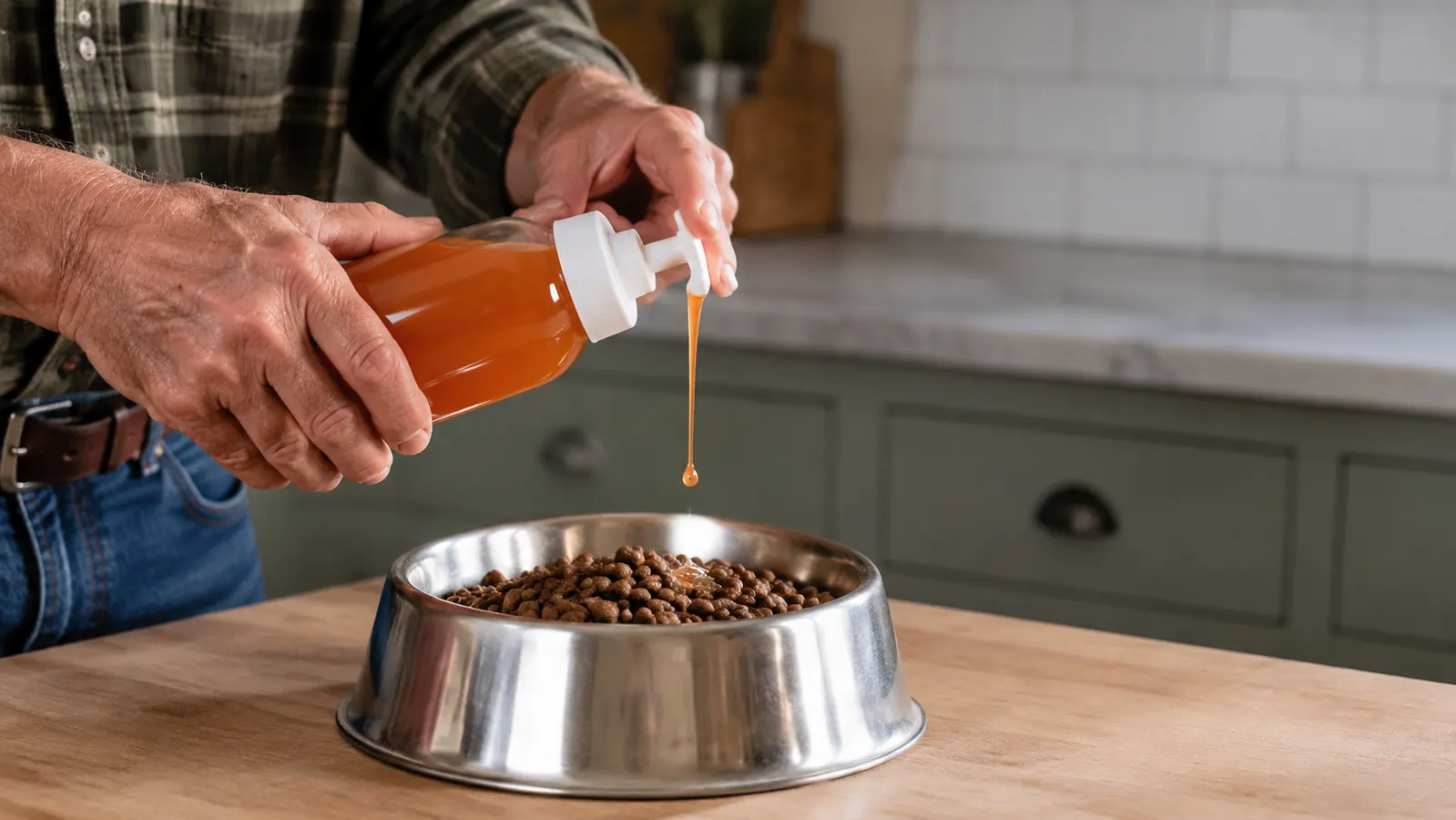
The single biggest reason I kept the Zesty Paws bottle in rotation is that none of my three animals fight me on it. Gus is twelve and set in his ways about food, Millie is nine and picky in a completely different, terrier-stubborn way, and Pearl is a ten-year-old indoor cat who treats anything unfamiliar in her bowl like an accusation. A few pumps of the salmon oil soaks straight into their regular food, the fishy smell does the selling for me, and every bowl gets licked clean. That never happened with capsules. Gus would eat around a whole one sitting in his kibble like it personally offended him, and Millie once carried hers across the kitchen and dropped it behind the trash can, which I did not find for three days.
The other thing the pump earns back is time. One bottle sits in the fridge door and covers all three animals at their own rough dose, so I am not managing three separate supplement bottles or trying to remember which capsule strength is safe for a cat versus a seventy eight pound Lab mix. On a normal weeknight that is one bottle, a few pump strokes over each bowl, done in under a minute. It is a small thing until you are doing it every single day for months, and the daily friction is usually what makes a supplement quietly stop happening around week three.
Where Fish Oil Capsules Win
Capsules earn their keep on precision. Each one is printed with an exact amount, so if your vet gives you a target dose for a specific weight, you can hit it exactly instead of estimating a partial pump for a smaller animal. That matters more with cats. Pearl only needs a fraction of what Gus gets, and eyeballing a fraction of a pump stroke is genuinely harder than it sounds, especially with a full bottle that dispenses more generously when it is new than when it is half empty. If your vet has given you a specific number to hit, ask about a capsule you can dose exactly, or ask whether splitting a capsule open is the right call for your pet's size.
Capsules also travel and store better. They do not need refrigeration, so a bag of them slides into a travel kit or a boarding drop off bag without a second thought, and there is no risk of a pump bottle leaking oil through a suitcase. Cleanup is basically zero, no oily ring on the counter, no greasy cap that needs wiping down after every use. If you split your time between houses, travel with your pet often, or just do not want one more thing living in the refrigerator, that convenience is real and I would not talk anyone out of it.
See the Salmon Oil Gus Actually Finishes
Zesty Paws Salmon Oil is the one that never gets left in the bowl in this house. Check today's price and current availability on Amazon.
Amazon Check Today's Price on Amazon →How I Actually Compared Them
I did not run a lab test, I ran a real household. Gus got the salmon oil pumped over his dinner every night for about ten weeks, then I switched him to capsules tucked into a spoonful of wet food for another six weeks to see if the fight over eating them ever eased up. Millie got the same rotation on her own schedule since she eats separately from Gus. Pearl only ever got the liquid, at a much smaller dose, because getting a whole fish oil capsule into a ten-year-old cat is not a fight I was willing to have twice.
What I was actually watching for was simple: did the bowl get finished, was there any sign of a greasy mess on the floor or the counter, and did the coat and skin look any different by the end of each stretch. None of this is a clinical trial, and I am not a vet, so anything that looked like a real change I asked our vet about at Gus's regular checkup rather than guessing on my own.
What I Actually Noticed on Their Coats and Skin
By about six weeks into the Zesty Paws stretch, the flaking on Gus had noticeably eased up, and his coat had that slightly slicker look under the porch light that I associate with him being well fed rather than sick. Millie never had a coat problem to begin with, so she was really my control, and her coat looked the same at the end as it did at the start on either product, which told me the change in Gus was probably real and not just seasonal. Pearl's coat is harder to judge because she is an indoor cat who grooms herself constantly, but I did notice less loose fur on the couch during the salmon oil stretch than during the weeks I was trying to work capsules into her routine.
During the capsule stretch with Gus, I could not tell whether the slower improvement was the product or just the fact that he was eating less of it overall, since so much of it got picked out of his bowl and left behind. That is really the honest takeaway from switching him back and forth: the ingredient itself may do similar work either way, but a supplement your dog will not reliably eat cannot help him nearly as much as one he finishes every time. None of this replaces an actual vet opinion on your pet's skin or coat, and I brought both stretches up with our vet directly rather than deciding on my own that either product was doing something clinical.
Dosing and Mess, Day to Day
On the dosing side, the salmon oil label breaks amount down by pet weight, roughly one pump per twenty five pounds for dogs and a partial pump for a cat Pearl's size. That is easy enough once you have done it a few times, but the first week I definitely over poured a couple of times because the pump dispenses a little differently depending on how full the bottle is. Capsules removed that guesswork completely for Gus and Millie since the label states an exact amount per capsule and per pound of body weight, and I never had to eyeball anything.
Mess told the opposite story. The pump bottle occasionally left a faint oily ring where it sat on the counter, and once Millie knocked it over and I found a slick spot on the tile that took two passes with a rag to fully clean. Capsules never once made a mess sitting in the bottle. The only mess I ever created with capsules was the day I pierced one open to pour it over Pearl's food instead of hiding it whole, which ended up messier than the pump bottle ever was.
The only mess I ever created with capsules was the day I pierced one open to pour it over Pearl's food, which ended up messier than the pump bottle ever was.
Cost Per Serving, Without the Sales Pitch
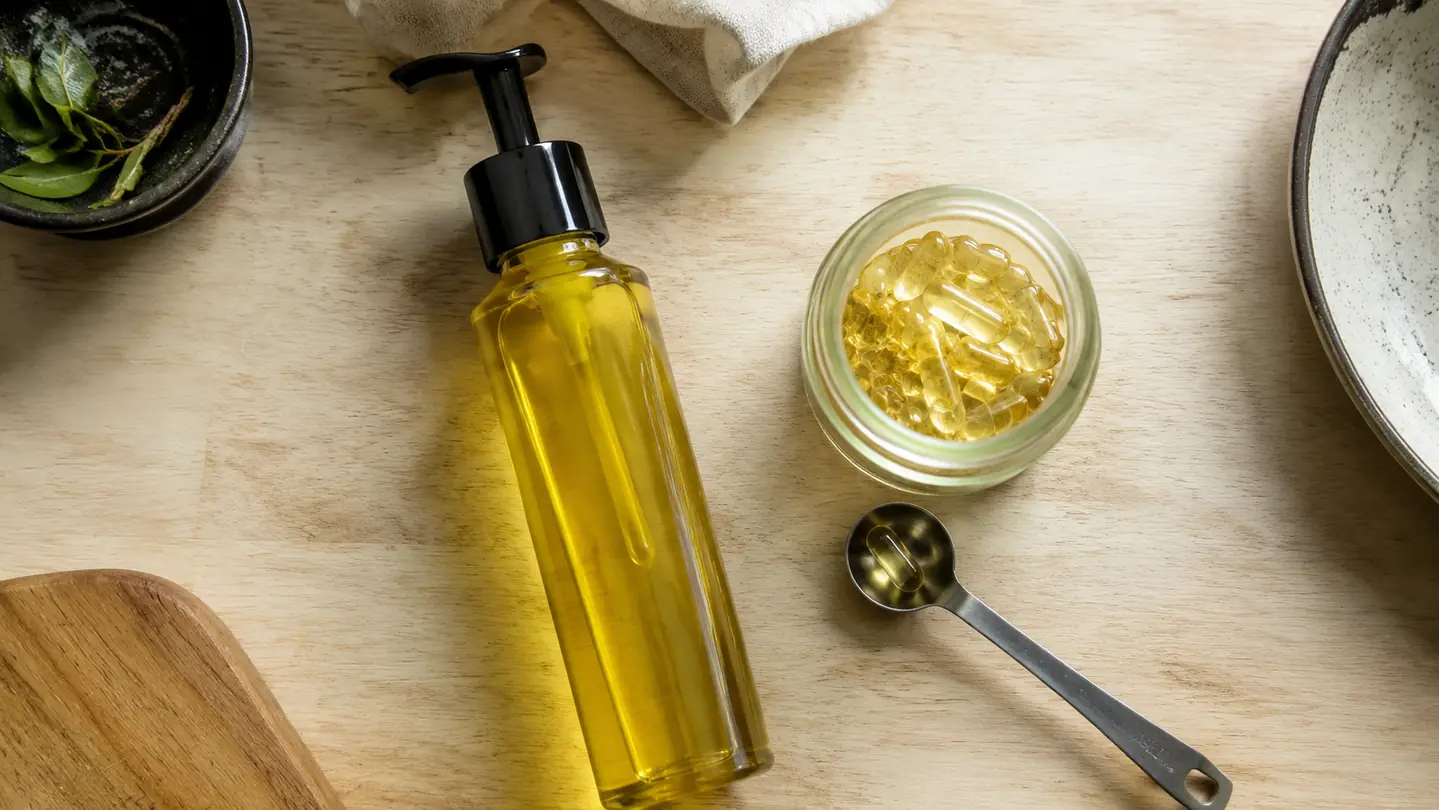
Nobody wants dollar figures thrown at them in a review, so here is the honest, price-free version. A single bottle of the salmon oil covers a mixed household like mine, one large dog, one small dog, and one cat, for close to two months at the labeled dose, because the smaller animals are only using a fraction of a pump each time. Capsules do not flex that way. A capsule sized for a large dog is one whole capsule whether you feed it to Gus or try to portion a sliver of it for Pearl, so a meaningful share of every capsule ends up wasted on the smaller pets in the house.
If you only have one dog in the seventy pound range, that math evens out and capsules stop losing anything on waste. It only tips in the liquid's favor once you are dosing more than one size of animal off the same product, which is exactly my situation with Gus, Millie, and Pearl all sharing one bottle at three very different amounts.
The Smell Test, and Why It Explains Everything Else
If you want the one variable that predicts everything else on this list, it is smell. Fish oil capsules are designed to mask the fishy odor until they are swallowed, which sounds like a feature until you own an animal who decides on smell alone whether something in the bowl is food. Gus and Millie both sniff their bowl for exactly one second before eating, and a capsule that smells like nothing much just reads as a hard little object sitting in the kibble, easy to nose aside and leave. The Zesty Paws Salmon Oil does the opposite. It smells exactly like what it is, and that smell mixes straight into the kibble instead of sitting on top of it, so there is nothing separate for a picky dog to identify and reject.
This matters more with Pearl than with either dog. Cats are famously more sensitive to smell than dogs are, and a strong fish scent is usually what gets her to actually approach a bowl she would otherwise walk past. I tried capsules with her exactly twice, both times pierced open and poured over her wet food rather than given whole, and both times she ate around the oily spot and left a visible ring of food untouched. The liquid gets no such treatment. She eats straight through the bowl, oil and all, which after months of watching her turn her nose up at anything unfamiliar is honestly the more surprising result in this whole comparison.
What Six Months of Restocking Actually Looks Like
The first bottle is the easy part of any supplement trial. Anyone can commit to something new for a few weeks. What actually tells you whether a product works for your household is whether you keep buying it once the novelty wears off, and I am now several bottles into the Zesty Paws Salmon Oil with no plans to switch back. The refill habit stuck because it never became a chore. The bottle lives on the same fridge shelf, the pump ritual takes seconds, and I have never once had to talk myself into using it, which was not true of the capsule stretch, where I would sometimes skip a dose entirely rather than fight with Gus over a pill he had already decided he did not want.
The one habit I did have to build was keeping an eye on the level in the bottle before it ran low, since a pump that is nearly empty dispenses less oil per stroke than a full one, and I want Gus and Millie getting close to the same dose every night rather than a thinning trickle toward the end. I now reorder when the bottle gets down to about a quarter full instead of waiting until it is empty, which has kept the dosing more consistent across the whole six months than it was in my first few weeks of guessing.
Who Should Buy Which
If your pet eats around anything unfamiliar in the bowl, or if you are dosing more than one animal at more than one weight, Zesty Paws Salmon Oil is the easier daily habit to keep up, and the one more likely to actually get eaten instead of picked out and left behind. If you have a single dog at a steady weight, want an exact amount to match something your vet gave you, or travel enough that refrigeration is a real hassle, fish oil capsules are the better fit. Either way, ask your vet before starting any new supplement, especially if your pet is on medication, pregnant, nursing, or very young, and watch for any sudden change in behavior or stool after starting either one.
Still Deciding? See What's Actually in the Bottle
Check today's price and current availability for Zesty Paws Salmon Oil on Amazon before you commit to a daily routine.
Amazon Check Today's Price on Amazon →