
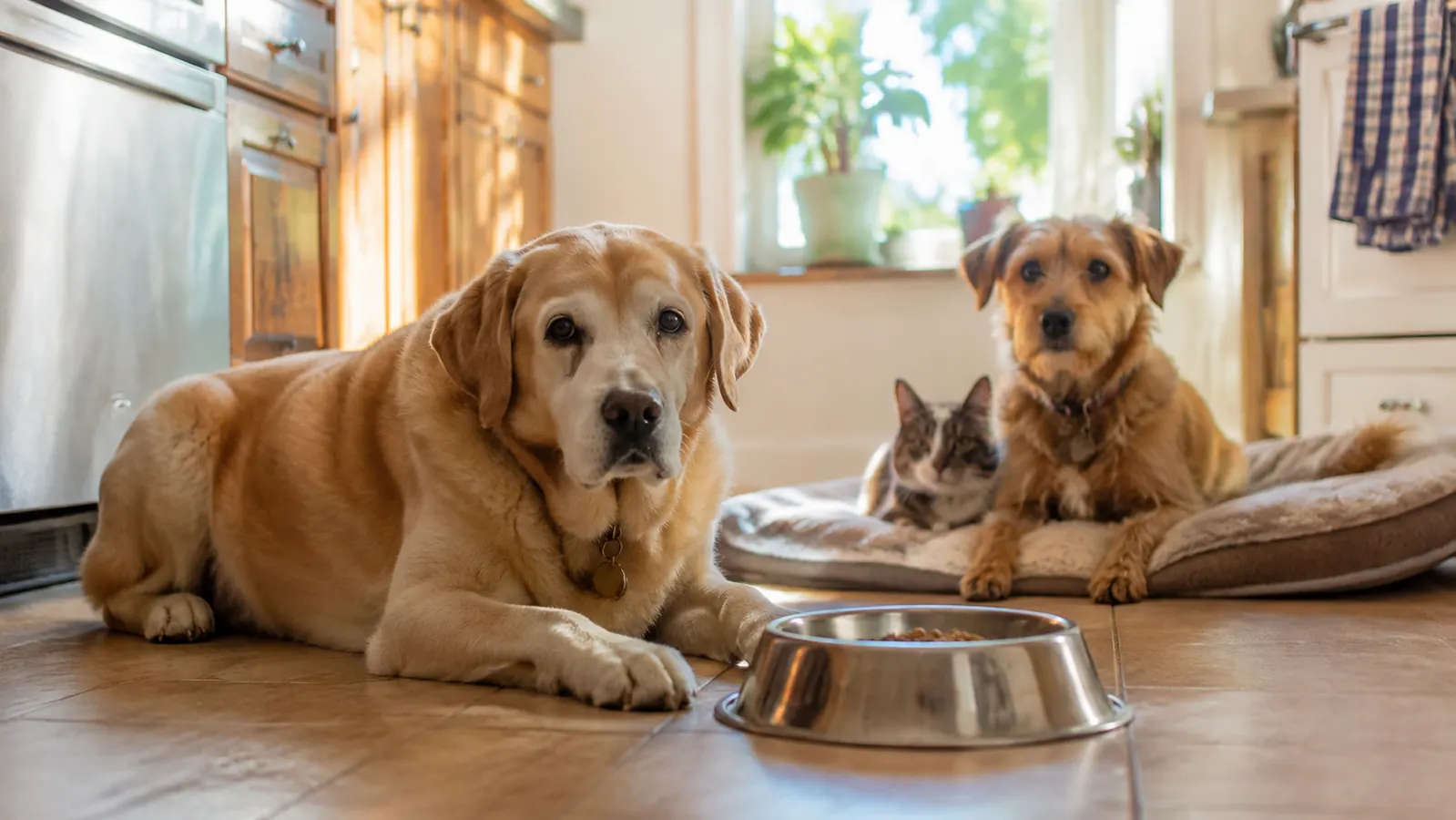
The first time Gus had an accident on my kitchen floor, I blamed the new bag of food. He's my twelve-year-old Labrador mix, adopted from a shelter here in Ocala, and for years his stomach never gave me a bit of trouble no matter what treats he snuck off the counter. I mopped up, told myself it was a fluke, and moved on with my morning. Then it happened again about five weeks later, the day after a stretch of ninety-degree afternoons when he'd spent more time than usual grazing on grass in the backyard, the way he does every summer whether I like it or not. A third episode followed a few months after that, right after my sister's dog stayed with us for a long weekend and the two of them shared a water bowl and half the yard. My vet checked him over, ran bloodwork, and told me nothing structural was going on. Just an aging gut that reacts more sharply to small changes than it used to.
That's when I stopped treating it like an occasional mess to clean up and started treating it like something I could actually manage. PetLab Co. Probiotic Chews for Dogs is the product that made that shift stick, mostly because of what happened before it. Two years earlier I'd bought a probiotic powder from a big box store that Gus refused to eat even stirred into wet food, so I learned the hard way that the best probiotic on paper does nothing if your dog won't touch it. A soft chew is different. Gus treats it like an actual treat, tail wagging, no hiding it in food, no fighting him at the bowl. A two-pack of thirty chews also meant I wasn't testing this for a week and quitting when I didn't see an overnight miracle, I was committing to a real stretch of daily use long enough to actually know if it worked. Here's the exact process I used to build that routine around Gus's schedule, step by step, including what I tracked along the way so I wasn't just guessing whether it was helping or hoping it was.
Start the Routine Gus Actually Sticks To
PetLab Co. Probiotic Chews are what turned this from a monthly cleanup job into a boring, forgettable part of Gus's evening bowl.
Amazon Check Today's Price on Amazon →Step 1: Watch for the Signs Before You Reach for a Supplement
Before I started anything, I paid close attention to what Gus's flare-ups actually looked like, because a daily probiotic isn't something you want to guess your way into. For him it was loose stool that showed up a day or two after some kind of change, occasional gas that made him get up and move to a different spot on the rug in the middle of the night, and a morning here or there where he'd sniff his food and just walk away instead of eating it. Nothing about it was dramatic or urgent looking. It was just consistently a little off from what normal Gus looks like, and once I started paying attention, the pattern was obvious.
For comparison, my other dog Millie, a nine-year-old terrier mix, has never had a single one of these episodes in the years I've had her. She'll eat almost anything off the sidewalk on a walk and her stomach handles it without a second thought. Watching the two of them side by side made it clear this wasn't a food quality problem or something going on in my house. It was specific to Gus and specific to how a twelve-year-old gut handles change differently than a younger one.
Writing down what a flare-up actually looked like for him, before I bought anything, gave me a baseline to measure against later. If I hadn't done that first, I wouldn't have been able to tell a real improvement from wishful thinking three weeks into using the chews.
I also spent an evening reading through other owners' experiences with senior dogs and reactive stomachs before I bought anything, mostly to check that what I was seeing in Gus wasn't unusual for his age. It wasn't. A handful of people described the exact same pattern, a dog with no history of stomach trouble suddenly having occasional loose stool or gas in the ten-to-thirteen-year range, with nothing showing up on bloodwork. That didn't diagnose anything, only a vet can do that, but it did tell me I wasn't overreacting to a single bad week.
Step 2: Introduce the Chew Slowly, Not All at Once
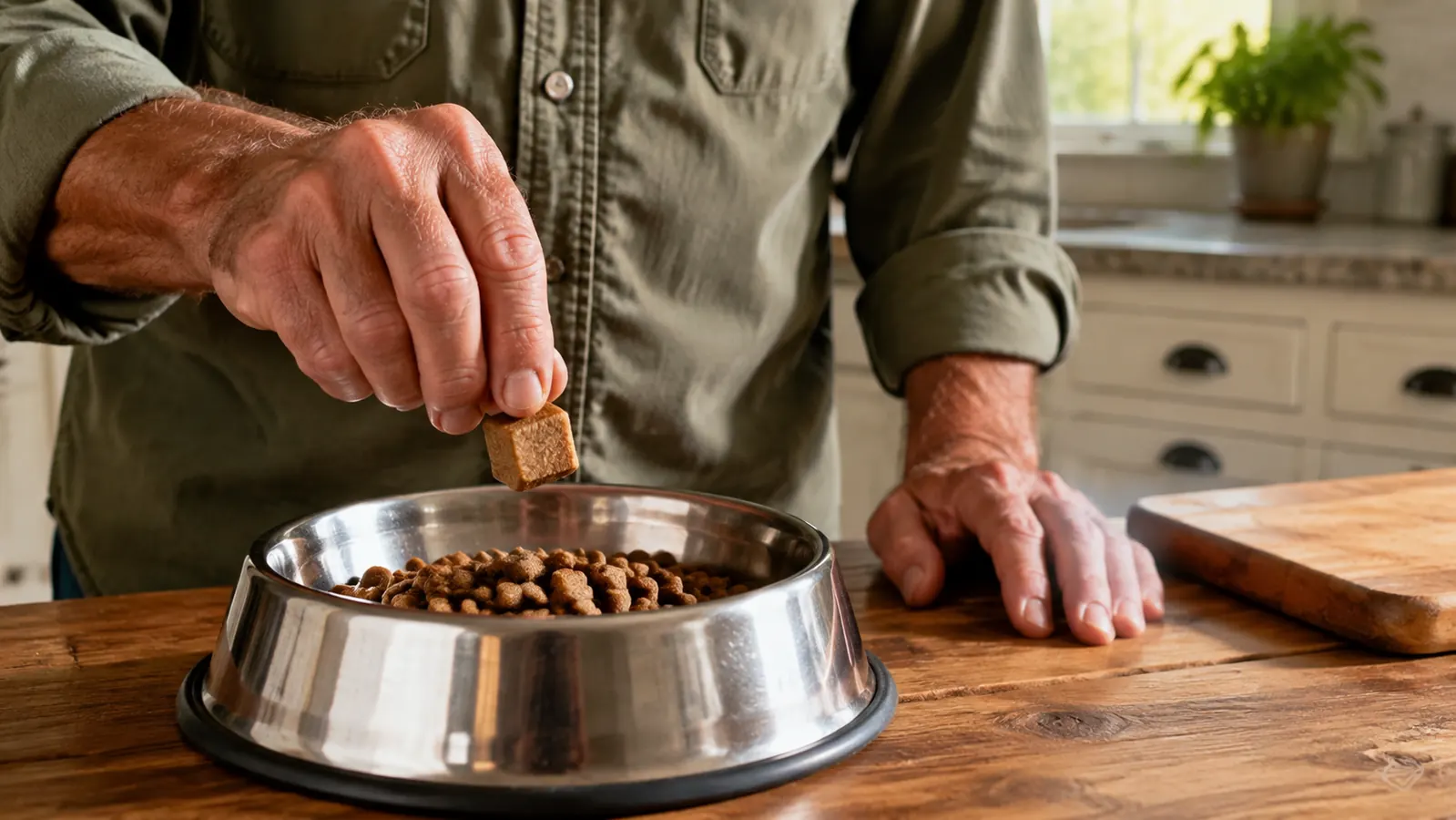
I didn't start Gus on a full daily chew right away. The PetLab Co. package gives a dosing range by weight, and for the first four days I gave him about half of what his weight called for, mixed right into his morning kibble instead of handed over as a standalone treat. Gus is around seventy pounds these days, a touch lighter than he was a few years back, so I wanted to see how an already sensitive stomach handled a new supplement before committing to the full dose. Half doses for a few days costs nothing and buys you information.
By day five I moved him up to the full recommended amount. Nothing got worse, no extra gas, no looser stool than his baseline. If your dog runs more reactive than Gus does, or if you're introducing this alongside a food switch, stretching that half-dose window out to a full week isn't overkill, it's just being careful with a stomach that's already sensitive.
Millie could probably go straight to a full dose without me thinking twice about it, but I don't assume that with Gus anymore. Slow and boring beats fast and risky when a dog's stomach is already unpredictable.
Step 3: Time It With the Same Meal Every Day
I picked dinner, because that's the meal I'm least likely to forget or rush through on a busy day, and I've given Gus his chew at dinner every single day since I started. Same bowl, same time, dropped in with his kibble like it's just part of the meal instead of a separate task on my list. Consistency is the entire game with a probiotic. It doesn't work because of one good dose here and there, it works because the same beneficial strains show up in his gut on a predictable schedule, day after day, whether I remember to think about it or not.
I keep the bag on the kitchen counter next to his food bin, not tucked away in a cabinet, because anything I have to go dig for eventually gets skipped on the nights I'm distracted or running late. That one small habit, keeping it visible right where I already stand every evening, is probably the biggest reason I haven't missed more than two or three days total since I started.
If you travel or have someone else feed your dog some nights, write the step down somewhere they'll actually see it. A routine only works if it survives the days you're not the one holding the leash.

Step 4: Track Stool Quality and Energy for Two to Three Weeks
I kept a short note on my phone, just one line most days: normal, slightly loose, great energy, skipped breakfast, whatever was actually true that day. It took about ten seconds and meant I wasn't relying on memory or a general good feeling to tell me if the PetLab chews were doing anything. The first week looked about the same as before I started, which is normal and not a reason to give up early, a daily probiotic isn't a same-day fix for a gut that's been reactive for months. By the second week Gus's stool had firmed up noticeably on the days that used to be unpredictable, and by the third week I'd genuinely stopped bracing myself every time I let him back in after a hot afternoon in the yard.
That log is also what told me it was actually the chews doing something and not just a good stretch of weather or luck. I could scroll back and see the pattern line up almost exactly with when I started, instead of just hoping I remembered it correctly. Three weeks of daily notes is a small ask compared to guessing wrong and wasting another two years like I did with that powder Gus wouldn't eat.
Energy and appetite mattered just as much as stool quality in that log. On the days Gus's stomach was unsettled, he'd also eat slower and sniff around his bowl instead of diving in the way he normally does, and he'd want fewer trips around the block. Once the chews had a few weeks to work, both of those came back to his normal baseline alongside the firmer stool, which told me this wasn't just one symptom improving in isolation. Millie's appetite and energy never moved an inch through any of it, which is exactly what I'd expect from a dog whose gut was never the problem to begin with.
Step 5: Know When a Chew Isn't Enough, Call the Vet
A daily probiotic is maintenance, not treatment, and I want to be straight about that distinction. If your dog has blood in the stool, repeated vomiting, sudden weight loss, or seems lethargic or in real pain, that's a call to your vet, not a wait-and-see approach with a supplement from the pet aisle. Gus's vet ruled out anything structural before I started any of this, checked his bloodwork, and confirmed there wasn't something more serious hiding behind the symptoms. That step mattered. I wasn't guessing that his stomach issues were just ordinary aging, I had a professional confirm it first before I built a routine around it.
If you're not sure whether what you're seeing in your own dog is a minor digestive dip or something that needs a real workup, ask your vet before you start a new supplement, especially if your dog is on other medication, is pregnant or nursing, or is very young. A chew that's worked well for a healthy senior dog like Gus isn't a substitute for that conversation, and it was never meant to be.
I've also kept Gus's regular vet visits on schedule instead of skipping them just because the chews were working. A daily supplement can smooth over day-to-day symptoms without changing whatever is happening underneath, so those checkups are still where anything more serious would actually get caught. Ask your vet at a normal visit whether a probiotic makes sense alongside anything else your dog is being treated for, rather than deciding that on your own.
What Else Helps Beyond the Chew
A probiotic isn't the only lever here. I kept Gus on the exact same food during the whole process, because introducing a new food and a new supplement at the same time would have made it impossible to tell which one was actually responsible for any change I saw. I also make sure fresh water is available at all times, especially through Florida summers when he's outside more and drinking more than he does in cooler months. Consistency in the food bowl matters just as much as consistency with the chew itself.
Millie doesn't need any of this and I don't do it for her, but for Gus it's become part of the same evening routine as the chew, not an extra project layered on top. None of it replaces an actual vet visit if something looks seriously off, it just gives a probiotic chew a stable, predictable environment to do whatever it's actually capable of doing.
I also got stricter about table scraps, which used to be the fastest way to trigger a bad week for Gus without me even realizing it was the cause. My cat Pearl doesn't get people food either, so it's not a rule I only apply to the dogs. Cutting out the unpredictable extras, on top of the daily chew and the steady food, is a big part of why the last several months have been so much quieter than the six before them.
By the third week I'd genuinely stopped bracing myself every time I let him back in after a hot afternoon in the yard.
Give PetLab a Fair Two-Week Stretch
One chew a day, the same time, the same bowl. That's the whole routine that turned Gus's stomach around, and it starts with grabbing PetLab Co. Probiotic Chews before the next flare-up shows up on your kitchen floor.
Amazon Check Today's Price on Amazon →