

Millie had never had a stomach in her life, not once in the nine years I have had her, until the week we switched her food. It was a recall scare, nothing dramatic, just enough that I swapped brands without doing the slow transition I always tell other people to do. Four days later I was letting her out at 2 a.m. for the third night in a row and Googling "probiotic for dogs" from my phone on the kitchen floor.
I ended up on PetLab Co. Probiotic Chews mostly because they were the first thing that showed up with enough reviews to feel safe trying, not because I had any brand loyalty. Six months and two bags later, I have a much clearer picture of what this actually does for a dog's gut, what it does not do, and where the monthly math starts to feel worth it or does not.
The Quick Verdict
Settled Millie's stool within about ten days of the food switch and it has stayed settled since, but it is not a fix for a dog with a real underlying gut problem, and the chews are big enough that a small dog needs the half-dose scored line every time.
Amazon Check Today's Price →See why 48,000+ dog owners keep a bag of this in the pantry
Check today's price and current stock on Amazon before you decide.
Amazon Check Today's Price on Amazon →How I've Used It
I started Millie on PetLab the same week as the food switch, one full chew a day, given right after her morning meal because she takes treats better on a full stomach. She is a nine-year-old terrier mix, about twenty-four pounds, and other than this one food-related flare she has never had a joint problem or a digestive complaint in the whole time I have had her. That is actually useful context, because it meant I was not trying to untangle a probiotic's effect from ten other things going on at once.
Gus, my twelve-year-old Lab mix, has the opposite issue set. His vet flagged mild age-related hip stiffness a while back and that is the thing we manage for him, not his stomach, which has always been iron. I did try him on PetLab for about six weeks out of curiosity more than need, and honestly could not tell a difference in a dog whose gut was not broken to begin with. That tells you something too: this is not a chew that visibly does anything if there was nothing wrong in the first place.
For the first ten days with Millie I kept a note on my phone tracking stool consistency on a simple firm, soft, or loose scale, because I genuinely wanted to know if this was working or if she was just going to settle on her own the way guts sometimes do. By day four things were less urgent. By day nine she was back to one normal walk-appropriate stool a day, which for a dog mid food transition felt like a small miracle.
I will admit I was skeptical going in, because I have wasted real money on supplements before. There was a joint powder I bought for Gus two winters ago that I sprinkled on his food for three months and never saw a single change in how he got up off the floor in the morning, and a calming spray for car rides that did nothing but make the back seat smell like lavender. So when I say the probiotic chews made a difference with Millie, I am saying it as someone who has plenty of experience with products that quietly did nothing while I kept paying for them out of hope.
What's Actually In These Chews
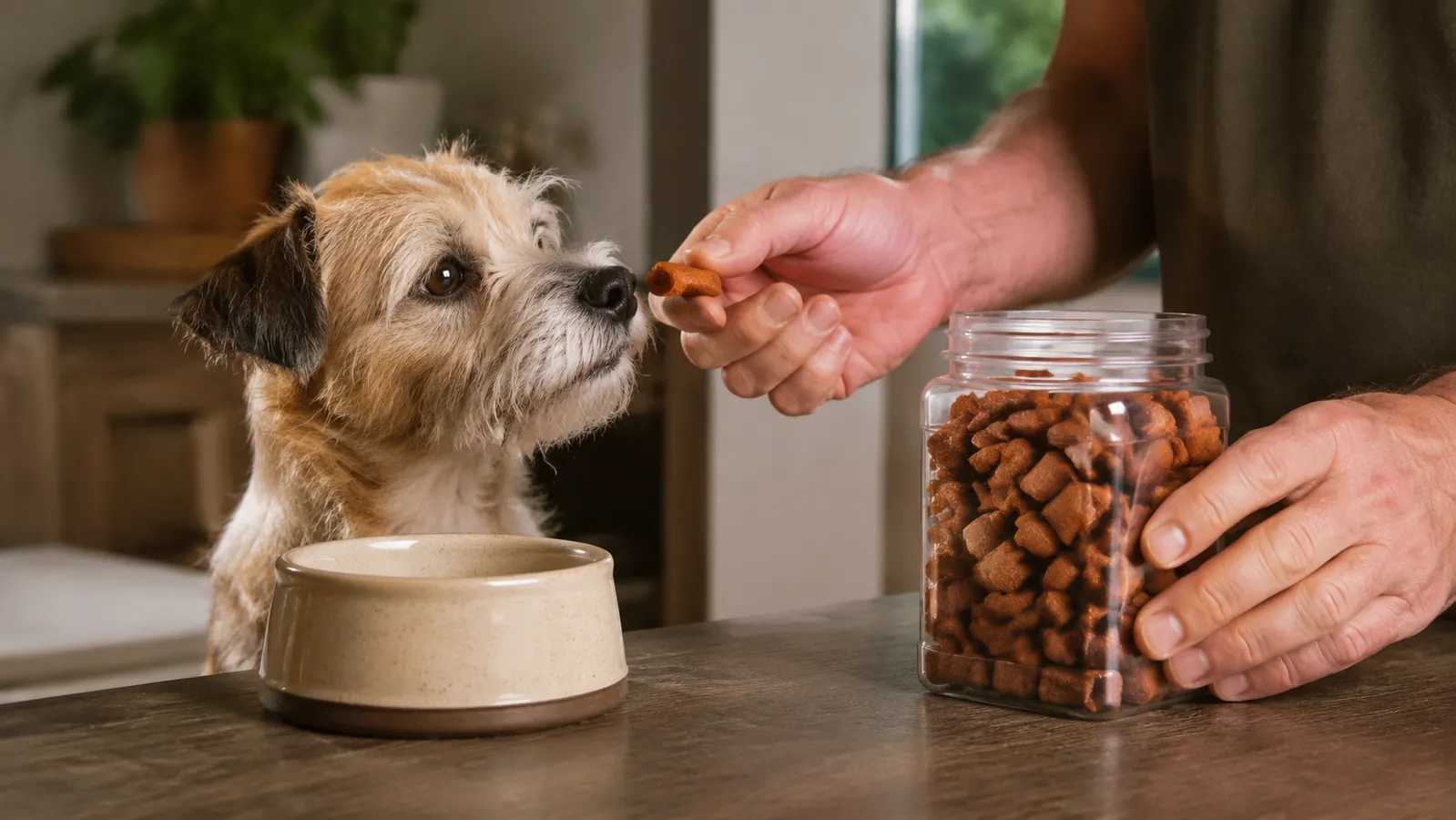
PetLab Co. lists multiple probiotic strains alongside a prebiotic blend and pumpkin, which if you have ever dealt with a dog's upset stomach you already know is the home remedy vets themselves often suggest. The chews are soft, more like a treat than a pill, and Millie has never once tried to spit hers out or hide it under the couch the way she does with her allergy medication.
What I appreciated after actually reading the label front to back is that PetLab does not oversell this as some kind of cure-all. The packaging talks about supporting normal digestion, not fixing diagnosed conditions, which matched what I found in practice. It is a maintenance tool, not a treatment, and I want to be upfront that I am not a vet and neither is the label. If your dog has ongoing diarrhea, blood in the stool, or sudden vomiting, that is a phone call to your vet before it is a chew from the pantry.
One thing worth knowing before you buy: the chews score in half for smaller dogs, and PetLab's own dosing chart puts anything under twenty pounds at a half chew. Millie is right at the edge of full-dose territory at twenty-four pounds, so I gave her the whole chew, but if you have a ten-pound terrier or a cat-sized dog, read that chart carefully because it is easy to just hand over a whole chew out of habit.
I also spent an evening comparing PetLab's ingredient list against a couple of other probiotic chews sitting in the same search results, mostly because I wanted to know if I was paying for anything different. The strain count on PetLab was on the higher end of what I found without being some inflated number that felt more like marketing than substance, and the inclusion of pumpkin fiber specifically stood out to me because that is the exact home remedy my own vet has recommended for Millie in the past when her stomach was off. That overlap between what a vet already tells you to try at home and what is in the chew is part of why I kept buying it after the first bag ran out.
Six Months In: What Changed and What Didn't
The honest answer is that the biggest change happened in the first two weeks and then things flattened out into a new, better normal that has held steady since. Millie's stool has been consistently firmer since roughly day ten of that first bag, and the gas that used to clear the living room after dinner has genuinely improved, not gone completely but noticeably less.
What did not change: her coat. I had half hoped a gut health supplement would show up as shinier fur the way some owners claim online, and for Millie it just did not. Her coat looked the same in month one as it does in month six, which I mention because I think some of the online praise for probiotics blurs into general supplement hype that is not really about what the ingredient does.
I also want to be clear that this was never a crisis-level gut problem. Millie's issue was a rough food transition, not a chronic condition, and I think that is exactly the use case PetLab is built for. A dog managing a real diagnosed digestive disorder needs a vet-directed plan, not a chew I picked because it had good reviews.
Cost, Palatability, and the Stuff Nobody Puts in the Headline

How This Compares to Other Things I've Tried
Before PetLab, my first instinct when Millie's stomach flared was to just add plain canned pumpkin to her food, which is the free, low-effort fix every dog forum recommends. It helped a little, but not consistently, and it turned her food into a mess I had to portion out separately every meal. A chew that I hand her once a day is just a lot less friction, and friction matters when you are the one who has to remember to do something daily for six months straight.
I also looked hard at a powdered probiotic that a friend swears by for her own dog before settling on PetLab, and the honest reason I did not go that route is that Millie is picky about texture in a way she is not picky about flavor. A powder mixed into wet food is easy to leave half-eaten in the bowl, and I did not want to spend six months guessing whether a partial dose was doing anything at all. The chew format took that guesswork off the table completely, since I watched her eat the whole thing every single morning.
At today's price for the two-pack of thirty chews, you are looking at roughly two months of daily use per bag if you are giving a full chew, longer if your dog is on the half-dose line. That puts it solidly in the mid-range for dog supplements, not the cheapest option on the shelf but nowhere near the priciest either.
Palatability was a non-issue with Millie from day one, she treats it like any other treat, but I have read enough reviews to know that is not universal. A handful of owners mention picky eaters turning their nose up, so if you have a genuinely food-particular dog, do not assume it is a guaranteed win just because most dogs take it fine.
The other detail worth flagging: this is a chew, which means it counts as a small extra calorie source on top of meals, something I did not think about until I noticed Millie's weight creeping slightly over month four. Nothing dramatic, about a pound, but if you have a dog who already needs to watch calories, factor the daily chew into the total rather than treating it as free.
What I Liked
- Settled a food-transition stomach issue within about ten days
- Soft chew texture Millie took without any fuss
- Half-dose scoring makes it workable for smaller dogs
- Multiple probiotic strains plus pumpkin, a combination that lines up with common vet advice
- No noticeable side effects over six months of daily use
Where It Falls Short
- Did not visibly change coat quality the way some reviews imply it will
- Adds daily calories worth watching in a dog prone to weight gain
- Not a substitute for a vet visit if symptoms are severe or ongoing
- Full chew size is large for very small dogs even with the scored half-dose line
- Made no detectable difference in a dog whose gut was already fine
By day nine, Millie was back to one normal, walk-appropriate stool a day. For a dog mid food transition, that felt like a small miracle.
Questions I Had Before I Started
The first thing I wanted to know was whether it was safe to give alongside Millie's regular monthly flea and heartworm prevention, since I am always nervous about stacking anything new on top of what she already takes. I called our vet's office and asked directly rather than trusting a forum, and was told a probiotic chew like this is generally considered low-risk to combine with routine preventatives, but that any dog on prescription medication, especially anything affecting the gut or immune system, should get a specific go-ahead first. That is the standard I would tell any reader to hold themselves to as well, ask your own vet rather than taking my experience as a substitute.
The second question was simpler: how long before I would know if it was doing anything. PetLab's own guidance suggested giving it a few weeks for a full effect, and that lined up with what I saw. The first two or three days looked like nothing had changed, which is exactly the point where I think a lot of people give up on a supplement too early and decide it does not work. If you try this, give it the full two to three weeks before deciding either way, not the first seventy-two hours.
I also wondered whether I should stop giving it once Millie's stomach settled back down, the way you would stop a course of medication once symptoms clear. I ended up keeping her on it daily instead, partly because the six-month stretch of consistent, boring, normal digestion felt worth the small daily cost, and partly because I had no real evidence that stopping would not just bring the gas and loose stool back the next time her routine got disrupted, a boarding stay, a new treat, a stressful vet visit.
Who This Is For
This is a genuinely good fit for a dog going through a food transition, a course of antibiotics, a stressful boarding stay, or any of the ordinary life events that tend to throw a gut off balance for a week or two. It is also reasonable as a general daily maintenance chew for a dog with a history of occasional loose stool or gas, the way Millie's has been over the years, even outside an obvious trigger. If your dog takes treats easily and you want something low-effort to add to the morning routine, PetLab fits that slot well.
It is also worth it for anyone who, like me, has a dog prone to the occasional gassy night after a change in routine even without a diagnosed condition. Millie is not a sickly dog, she has just always had a stomach that reacts a little more than most to change, and having a daily chew that keeps that baseline steady has made the whole household calmer, mine included.
Who Should Skip It
Skip it, or at least talk to your vet before starting it, if your dog has a diagnosed digestive condition, is on prescription medication where a new supplement could interact, or is showing symptoms severe enough to worry you, blood in the stool, repeated vomiting, obvious pain. Gus never needed this and I could not tell it did anything for a dog whose stomach was already fine, so if you are buying this hoping it will also help joints or energy the way some blanket wellness supplements claim to, it will not, it is a gut-health product and only a gut-health product.
Ready to see if it settles your dog's stomach the way it settled Millie's
Check today's price and availability on Amazon.
Amazon Check Today's Price on Amazon →