
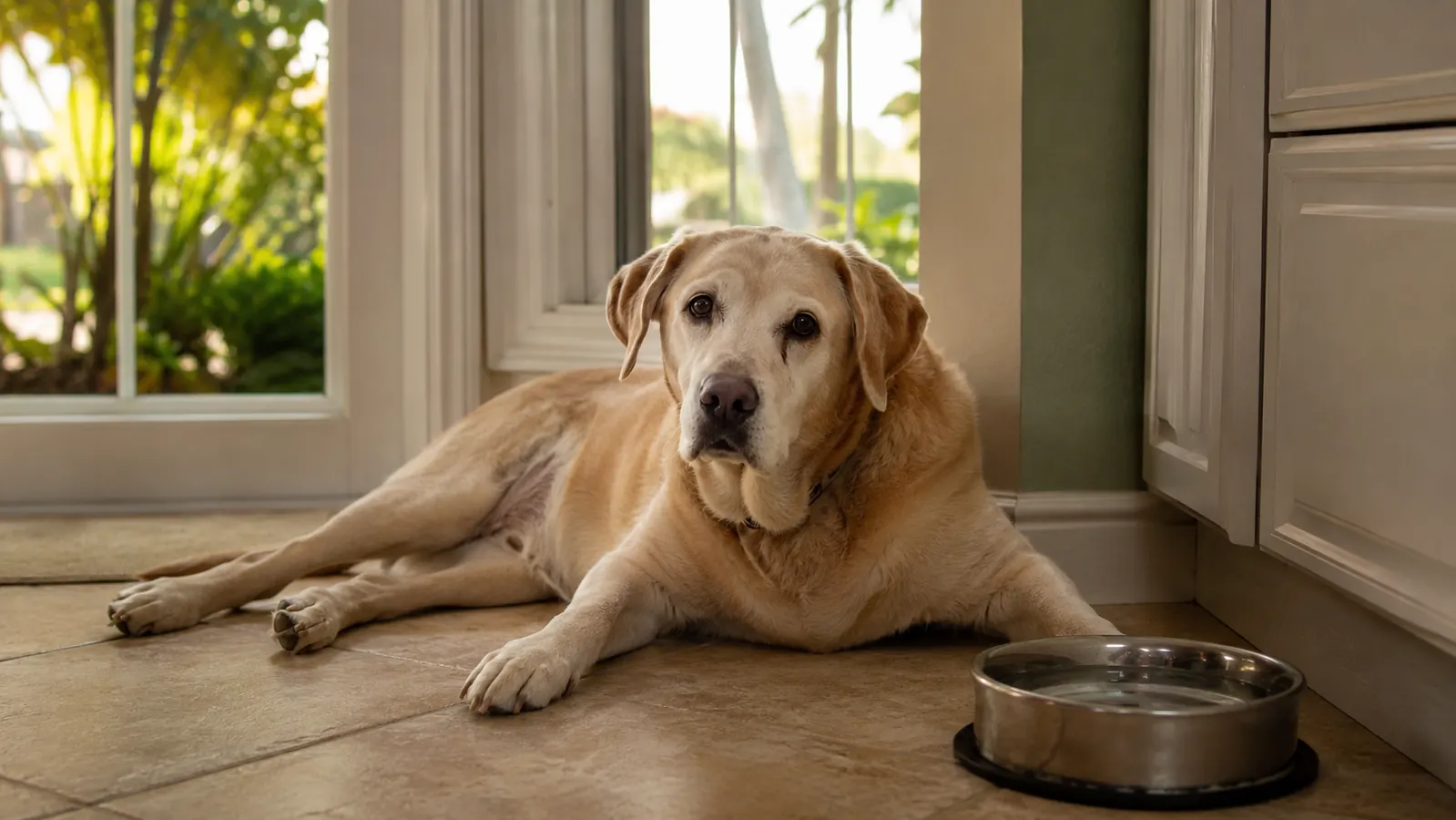
Three weeks into a food switch that was supposed to be simple, Gus started leaving soft puddles by the back door that had nothing to do with his hips. He's twelve, a Labrador mix I adopted from the shelter here in Ocala nine years ago, and I already know every sound and smell that means trouble with him. This one caught me off guard. Three accidents in four days, from a dog who had been reliably, boringly regular since the day I brought him home, and a mess I was scrubbing off the tile before my coffee had even finished brewing.
I did the thing every vet site tells you to do first: three days of boiled chicken and plain white rice, no seasoning, no fun for either of us. It settled him for about a day and a half, then the soft stools came right back the moment I mixed his regular food in again. This is usually where I'd tell you PetLab Co. probiotic chews fixed everything overnight, but that's not honest, because I tried two more things first and wasted real money doing it. I tried plain canned pumpkin, a scoop stirred into his bowl every night, because a woman at the dog park swore by it. Nothing. Then I bought a jar of powdered probiotic off the grocery store shelf, the kind with a picture of a happy golden retriever on the label, and used a full scoop every night for two weeks straight. Nothing changed except how much money I'd wasted on a jar that did nothing.
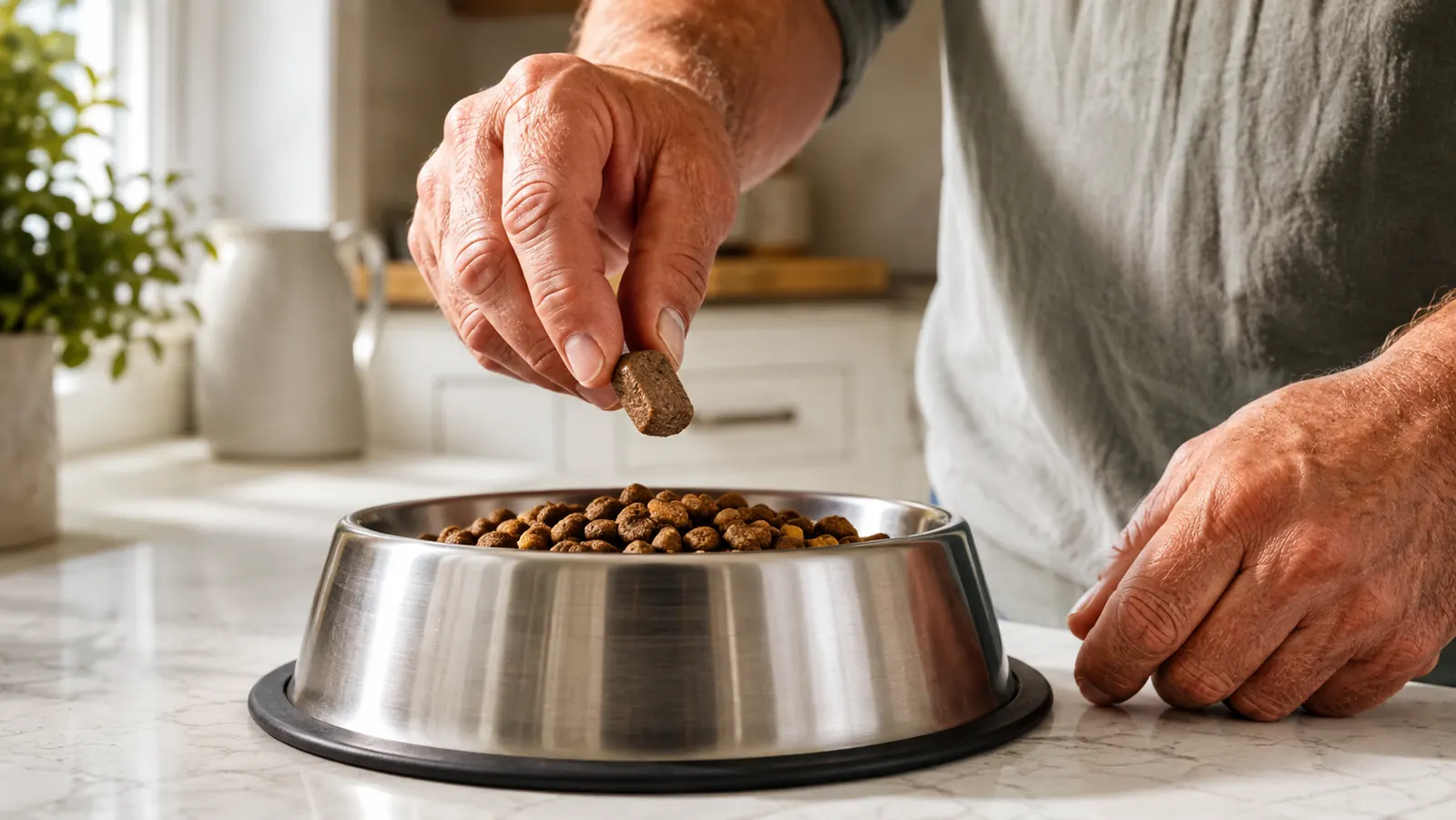
I found the answer on a dog owner forum at eleven at night, after Gus had already been out twice. Someone in the thread had the exact same story, a food switch that turned into weeks of soft stool, and said PetLab Co. probiotic chews were the first thing that actually worked for their dog. I was skeptical. I'd already burned through a jar of powder that promised the same thing and did nothing. But Gus was miserable, I was tired of mopping the laundry room floor at midnight, and one more bag of chews felt like a smaller gamble than another round of prescription food from the vet's office.
I started him on two soft chews a day, worked into his morning kibble so he never noticed they were there, which matters with Gus because he's suspicious of anything that smells like medicine. The first two days, nothing changed. Day three, the stool was a little firmer. By day four it held its shape enough that I stopped dreading the morning walk. I kept a note on my phone with the date, because after wasting money on things that didn't work, I wanted proof, not just a feeling that things were better.
Gus weighs about seventy-eight pounds, big enough that half doses never seemed to do much for him, so I stuck with the full two-chew serving on the label instead of guessing at something smaller. I also stopped switching foods cold turkey after this whole mess, which I wish I'd known before it started. Now when I change his food I mix the old and new together over a full week instead of a weekend, and the chews go in from day one instead of after things have already gone sideways.
By day nine, Gus had a normal, fully formed stool for the first time since the food switch, and I actually stopped and stared at it like it was good news, because it was.
Tired of Mopping Up at Midnight?
If your dog's stomach has been off since a food switch and you've already tried the bland diet and the pumpkin, PetLab Co. probiotic chews are worth a look before you spend more time and money on something that won't touch it.
Amazon Check Today's Price on Amazon →Millie, my nine-year-old terrier mix, never had a single day of trouble through any of this. Same house, same water, only a smaller portion of the same new food because of her size, and her stomach has just never been the dramatic one in this family. I mention her because it's tempting to credit a supplement for fixing a problem that might have resolved on its own, and having a second dog in the house who was never affected made it easier to trust that the chews, not just time, were doing something for Gus specifically.

I kept him on the chews well past the point where his stool had normalized, mostly out of nerves. I didn't want to stop too early and land back at square one. Six weeks in, I finally slowed him down to one chew a day, and nothing changed. He's been steady since, through two more bags of his regular food and one accidental raid on Millie's bowl that would have wrecked him a few months earlier and barely caused a hiccup this time.
He actually likes the chews, which surprised me more than the stool did. Gus turns his nose up at pill pockets and at anything that smells remotely like a supplement, but these disappeared out of my hand like a treat every single morning. That mattered more than I expected, because the powder I'd bought before this only worked if I remembered to mix it in, and half the time I forgot or he picked around it in the bowl. A chew he actually wants to eat is a chew that actually gets used every day, which turns out to be the whole point.
I want to be honest about the parts that weren't dramatic. The chews didn't touch his hip stiffness, that's a separate conversation I have with his vet and a separate supplement entirely. And I don't think a probiotic is magic for every kind of stomach trouble. If Gus had been lethargic, off his food, or losing weight, I would have been at the vet within a day, not trying chews off a forum recommendation. This was a food-transition stomach, not a symptom of something bigger, and that distinction matters more than any supplement does.
What I'd Tell You If We Were Sitting at My Kitchen Table
If you're standing in your own kitchen at midnight with paper towels in one hand and carpet cleaner in the other, here's what I'd actually tell you. Rule out the scary stuff first. Sudden diarrhea, especially with lethargy, vomiting, or blood, is a vet visit, not a supplement aisle decision, full stop. But if you just switched foods, added a new treat, or your dog's stomach has been quietly unsettled for a couple of weeks with nothing else going on, a probiotic chew is a reasonable, low-risk thing to try before you spiral into every specialty food on the shelf the way I almost did. Give it more than a couple of days, too. Nothing changed for us until day three, and the real proof didn't show up until day nine, so if you quit after forty-eight hours because nothing looks different yet, you're quitting before the chews ever had a real chance. PetLab worked for Gus. It might not work exactly the same way for your dog, every gut is different, but it's the first thing in three weeks of trying that actually gave me a date worth writing down.
Ready to Stop Guessing?
PetLab Co. probiotic chews are what finally settled Gus's stomach after everything else fell flat. If your dog's digestion has you mopping floors at midnight too, today's price is worth a look.
Amazon Check Today's Price on Amazon →